Unlike London, today there are only a few authentic period interiors left in Paris, having survived from before the French Revolution,
or the French’s predilection for changing fashion constantly.
For the potential collector, interior designer or architect, looking for long-term investment as well as decorative pieces particularly
suited to contemporary interiors, French antiques certainly deserve attention.
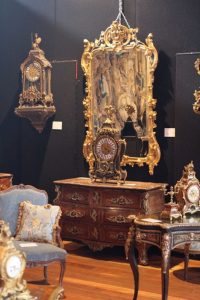
Anton Venoir Interiors in Melbourne specialise in fine French furniture, textiles and objet d’art from the 17th to the 19th centuries. They display their collection at significant events, like the recent AA&ADA Melbourne Antiques fair, as well as in their private showroom –
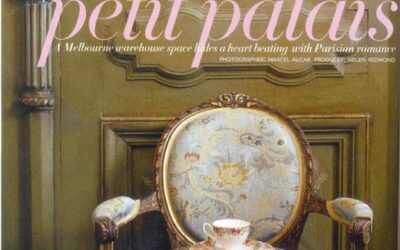
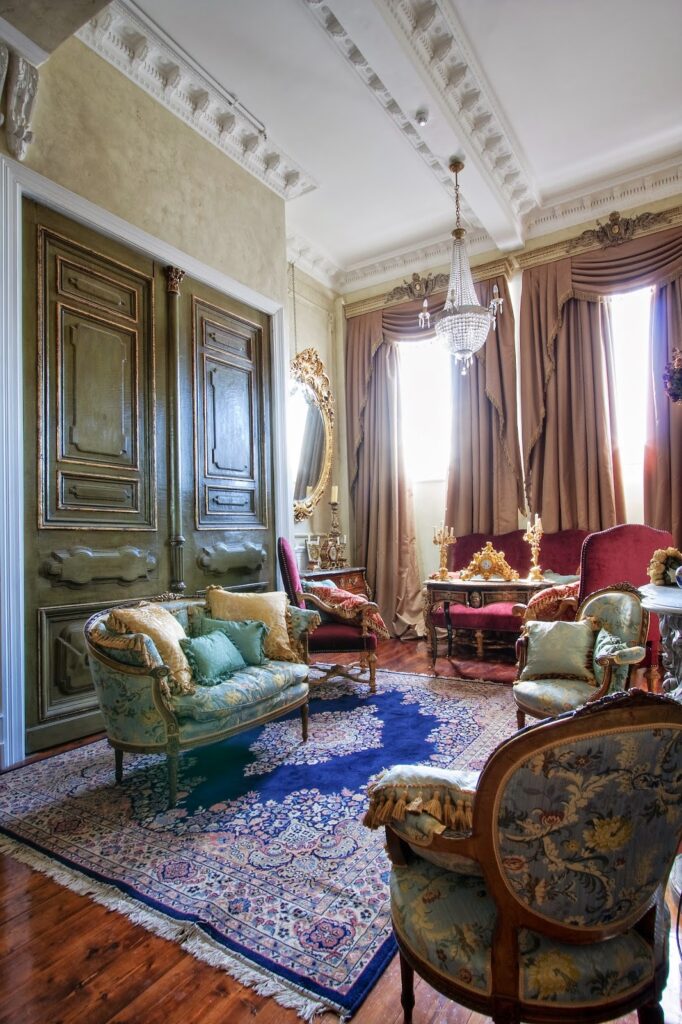
Our Parisian-style Petite Palais, known as Appartement 26, serves as a showroom, venue for high tea, and private dining.
Appartement 26, where you can view and appreciate the diversity and fine quality of the pieces on offer.
From chairs to clocks, from commodes to salon suites, and from tulipwood to kingwood pieces with brèche violette marble tops,
the selection of antiques also includes mirrors and tapestries.
From the 17th Century to the 19th Century, we explore styles of Louis XIV, Régence, Louis XV, and Louis XVI.
We have carefully studied and chosen each style.
Our “French Liaison” & Philosophy
Our focus on importing significant, investment-grade French antiques, including pieces from the Louis XIV, Regence, Louis XV, and Louis XVI periods.
Appartement 26 by Anton Venoir Interiors create an emotional connection through design, blending historical charm with contemporary
interiors.and a deep connection (liaison) to French culture, history, and style,
Located off Chapel Street in Prahran, this space is designed to feel like a hidden, opulent Parisian apartment, transporting visitors to 18th-century France.
Our intimate “Bottomless Parisian High Tea” events and bespoke private dining experiences featuring French cuisine. It is furnished with curated antiques, including 17th-century tapestries, baroque mirrors, and chandeliers, in an atmosphere furnished with curated antiques,
including 17th-century tapestries, baroque mirrors, and chandeliers.
Anton Venoir Interios host workshops and “Journey to Paris” dining experiences
Anton Venoir provides styling services that incorporate fine French antiques to create “fabulous decor”.
Anton Venoir Interiors are a resource for designers, architects, and collectors looking for authentic, period pieces.
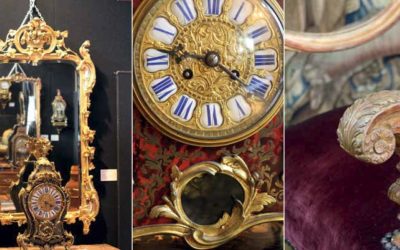
The mirror in this view of their gallery comes from the south of France. It is decorated with grapes, vine leaves and branches, so redolent of the area’s 2500+ year’s wine tradition. The 18th century in Provence, like the rest of Europe and Britain were glory years, the land rich and fertile providing prosperity through active trade.
More sophisticated pieces were influenced by Paris as the eighteenth century Provencal furniture makers responded to the latest fashions from the capital.
In the first half of the century there was the sinuous curves, beautiful ornamentation and asymmetrical characteristics of the Louis XV or Rococo) style and in the second half, the ordered lyrical elegance of the Louis XVI, or Neoclassical style
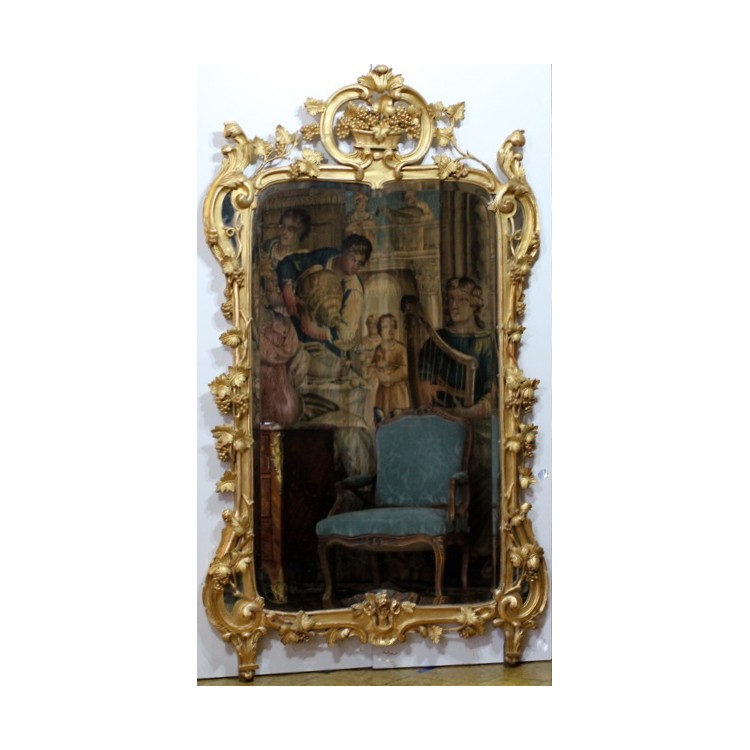 18th Century Louis XV Period Giltwood Mirror c1750. Anton Venoir Interiors, Melbourne.
The mirror is from the region near Beaucaire, which is revealed in the quality of regional timber used whose strength facilitated the work of the sculptor
who carved its applied decorative ornament that was later gilded.
The Residents in Arles, Beucaire and Tarascon supported the tradition of fine furniture making in their region, produced by local craftsmen.
The two main areas of production were Arles and Fourques.
Arlesian pieces had an emphasis on elaborate ornate carving, with curved lines and lavish floral detail on delicate,
low relief, such as garlands of roses, flower buds and olive branches.
The style of Fourques meant furniture with deeply sculpted curves and undulating mouldings with little or no decorative motifs,
and with less carved detail and ornamentation.
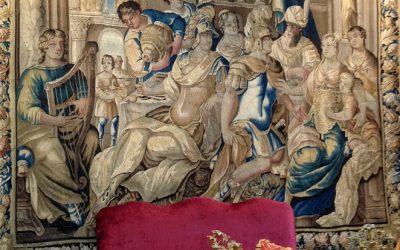
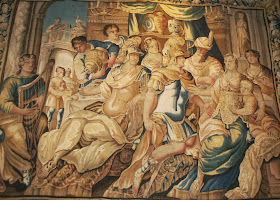
Anton Venoir Interiors are currently offering a splendid seventeenth century ‘Royal Aubusson Tapestry by Isaac Moillon
(1614-1673) depicting the‘Banquet of Dido and Aeneas’.
In the grand palace of Carthage the guests at a banquet are gathered around Dido Queen of Carthage, who has her arm around Cupid,
an indication the Trojan hero Aeneas on her right is holding her captive with his many charms.
Accompanied by Achate (being served wine) Aeneas is relating to Dido the story of the misfortunes of the city of Troy.
The “moral” of the story is that young women should not succumb to the advances and promises of ardent young men,
because as it turns out Aeneas abandoned her.
The border of the tapestry is a garland of flowers and it’s signed “A Fleurs de Lys B ” – Royal factory of Aubusson.
The factory produced both carpets and tapestries in France from the 14th century.
Their origin was with the weavers of Flanders, who sought refuge in the town of Aubusson in the late 1500’
During the 17th century Aubusson weavers were given “Royal Appointment” status.
Aubusson and Gobelins received Royal Appointment status. Louis XIV bought Gobelins in 1662. He elevated tapestry to a high art form.
During the 18th century, tapestry became part of the decoration of walls in town, fixed onto battens.
Anton Venoir Interiors import pieces that are shown off to perfection in their private showroom
at Prahran,where you and your advisors can view and consider pieces from their collection for yours
.

Furniture construction and design also significantly advanced in France during Louis XIV’s reign. Its design style was strong and bold,
complementing the era’s so-called ‘Baroque style’ with its uncompromising symmetry, grand effects and studied opulence.
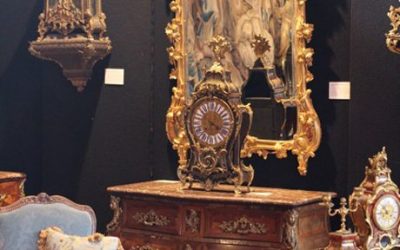
Among the many superb craftsmen one stood out, he was Andre Charles Boulle, born 1642 – 1732.
He effectively used timber inlaid with tortoiseshell and engraved brass to render superbly wrought designs.
The Bureau plat is of the finest quality after a model by Leonard BOUDIN ( 1735-1761).
Many of the exceptional 19th century Decorative Art pieces, were modeled after pieces by Master Ebeniste’s.
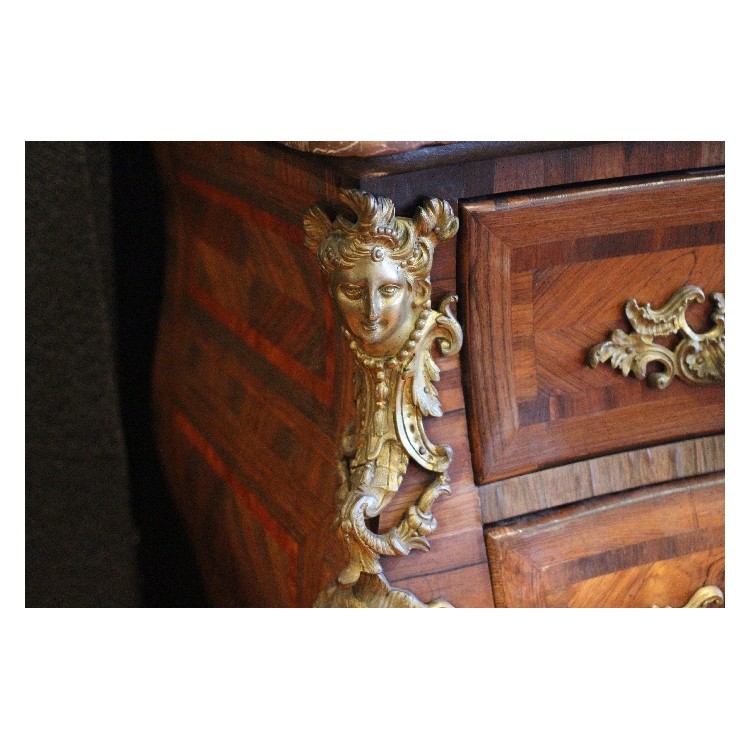
Often underneath tapestries you would find disposed elegantly, an 18th century Louis XV Ormolu Mounted Kingwood and Bois Satine Commode.
Anton Venoir Interiors has one of these on offer, in the design style known as Louis XV or ‘Rococo’,
which is characterized by its curvaceous bombe shape, capricious ‘cabriole’ legs and splendid applied ormolu mounts
After 1751 furniture in France was required to bear impressed stamp of the maker.
The Jurande des Menuisiers Ébénistes, who examined pieces and if satisfied with the quality impressed the initials J.M.E. on a piece,
and only those made expressly for the Crown were exempt
This is stamped FF. Delorme, JME – Francois Faizelot Delorme (1691-1768) Maître Avant 1735 and Jean Louis Faizelot Delorme, Maître 1763.
They all belonged to one the most famous families of cabinetmakers; the father, Francois Faizelot Delorme (1691-1768) with his sons Jean-Louis Faizelot Delorme, Alexis Faizelot Delorme and Adrien Delorme who were all maitres-ebenistes.
The best interiors of the 18th century in the French neoclassical taste, achieved a splendid synthesis between fixed and movable decoration
and furniture with the new style becoming popular after the Revolution. ‘
Although the classical doctrine flowed from Paris at the beginning of the nineteenth century it was still inspired by pre revolutionary ideals and models.

Faizelot Delorme
(b Paris, c. 1715-20; d after 1783). French cabinetmakers and dealers. Were on of the most famous familes of cabinetmakers; father, Francois Faizelot Delorme (1691-1768), and brothers Jean-Louis Faizelot Delorme, Alexis Faizelot Delorme and Adrien Delorme were all maitres-ebenistes. Adrien became a maitre-ebeniste on 22 June 1748 and was a juror of his guild from 1768 to 1770. Jean Louis Faizelot Delorme became maitre ebeniste in 1763. They made and sold luxury furniture throughout the 18th century in the Regence and Louis XV style, decorated with japanning either in imitation of Chinese lacquer (e.g. Amsterdam, Rijksmus.) or with European decoration (e.g. Waddesdon Manor, Bucks, NT). He also carried out sumptuous floral marquetry (e.g. Paris, Petit Pal.). His most distinguished work consisted of small pieces of furniture (e.g. Paris, Louvre; London, V&A; Washington, DC, Hillwood Mus.) embellished with floral marquetry or inlays of scrolls and foliation executed in end-grain wood on a dark-veined, light-wood ground forming a chevron pattern (e.g. Lyon, Mus. B.-A.).
JME Stamp
On August 20, 1751 the French parliament voted for the constitution of the Jurande.
An additional stamp, JME (for jurande des menuisiers-ébénistes (translation Cabinet Makers & Carpenters)) would be added once a committee,
made up of elected guild members who inspected the workshops four times a year, had approved the quality.
Any furniture that failed to meet the required standards of craftsmanship was confiscated.
The elaboration of a piece of furniture was a complex process since it involved the collaboration of several artisans, each of which belonged to his own guild, all governed by very strict rules. The executor, who was often the creator, was an ebeniste. The other artisans worked under his supervision, like the sculptor, the engraver, the caster, the gilder, the metal worker, etc.. The cabinet makers’ guild had well defined statutes. The training was the same for everyone. Aspiring master cabinet makers began as apprentices in a workshop where they would stay for several years until they presented their best piece to the “Jurande”. The “Jurande” was a very powerful organ within the guild whose role was to evaluate the candidates to master cabinet makers, as well as the quality of their work. The approved works were stamped with the letters JME (Jurande des Menusiers Ebenistes), a jury of cabinet makers. After 1743 the stamp became obligatory,
a rule that was strictly followed in Paris until 1790, when guilds were abolished.
This stunning Boulle bureau plat came to Melbourne from the private collection at the Chateau de Cheverny in the Loire Valley. During World War II, the Mona Lisa, along with other famous works of art and significant pieces decorative art, were hidden in this Chateau. One of Anton Venoir Interiors treasured pieces, the bureau plat has a reversible top, which flips over to reveal the original tooled leather-writing surface so that it could act as a desk as well
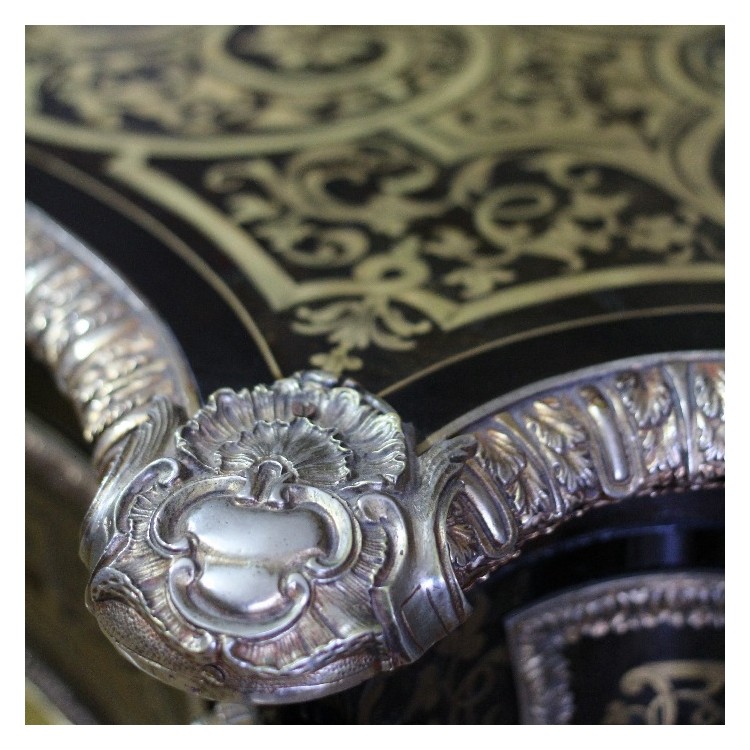

Circa. 1848, the ormolu-banded top is inlaid overall with scrolling arabesques, above two shaped drawers,
which are centrally fitted with Dionysian Satyr masks.
The top is raised on hipped cabriole legs, which are mounted with Bacchus’ masks within trailing vine foliage.
The legs end with gilded tapering scroll sabots, resembling deer hooves.
The French coined the phrase “vive la difference’, and incorporated it into the fabric of their homes.
If you embrace French antiques the exuberant spirit and the innate style of France and its people can be yours.
For lovers of fine furniture if you are in Melbourne or visiting from interstate or internationally, then Tony Venios of
Anton Venoir Interiors is the man to see.
The magnificent collection of 17th, 18th and 19th Century French decorative arts he has assembled include many pieces headed for museums.
The works have been collected over the past 25 years.
Phone and make an appointment and Tony Venios will help you to start planning your new style, or to choose a special piece for your collection.
BOULLE MARQUETRY FURNITURE:
Since the 17th century, the luxurious effect of Boulle marquetry has had an enduring appeal. First exploited as a technique by André-Charles Boulle in his work for the French Court during the reign of Louis XIV, the technique has always been associated with the most opulent and expensive designs. Boulle, himself a bronzier, pioneered the use of the exceptionally fine and bold gilt bronze mounts that give so many pieces such sculptural presence and classical association. But in the first decades of the 18th century, although still exploiting the rich contrast of the black of the ebony, the gold of gilded bronze and brass, silver-toned pewter and often red-coloured tortoiseshell in the marquetry, Boulle introduced the light, playful designs of the dessinateur de la Chambre et du Cabinet du Roi, Jean Bérain. Now the decorative surfaces were enlivened with the small-scale, lacy designs of playful singeries, garlands of flowers and airy architectural fantasies, all held together within delicate landwork.
During his own lifetime, Boulle was commissioned to make replicas of some of the great pieces made for both the King and the Court, sometimes only slightly altering the designs. After his death in 1732, Boulle’s sons, who had been running the workshops since 1715, continued to produce pieces using their father’s techniques and models, and demand for Boulle-marquetried furniture continued throughout the 18th century. Boulle marquetry was at the height of fashion in the time of Louis XVI when the style of the Sun King, Louis XIV, underwent a revival. From this time, great makers such as Levasseur and Baumhauer created their own versions of Boulle’s originals and adapted the decorative techniques to furniture forms popular during their own time.
The taste among the great collectors for the styles of ‘all the Louis’ of course continued throughout the 19th century, and Boulle-style furniture held its popularity and prestige. Important makers, such as Sormani, Zwiener and Linke in France, turned their attention to copying or adapting the great pieces of the past. Many of these 19th century pieces took their places comfortably side by side with their predecessors from the 17th and 18th centuries.
GOURDIN:
An XVIIIth century illustrious family of carpenters, the Gourdin have marked the history of seats, from the Régence to Louis XVI. There was three of them: John, the father, Jean- Baptiste, the eldest son and Michel, his brother, the Gourdin family has always been synonymous with quality. Their seats tell the story of the eighteenth century styles. At the head of three separate workshops, Gourdin had a prestigious clientele and realized the most important commands of the time.
Exceptional dynasty:
Jean Gourdin (c. 1690-1764)
Patriarch of the dynasty, Jean Gourdin was born around 1690, probably in Paris. After gaining his master’s in 1714, he married Marie-Madeleine Collet, herself from a family of carpenters. By this time, Jean Gourdin opened a shop in the Clery street, in the neighborhood of Bonne-Nouvelle, and hired companions and workers. In 1732 he inherited the shop from his father-in law, Jean Collet, which allowed him to develop his workshop and permanently associate his name at 36 rue de Clery. Then he bought the second part of the store to his wife’s family in 1743.
He had four children, two girls. Marie-Anne, the eldest, born in 1719 and married in 1745 with Jean Avisse, renowned carpenter and son of Louis Avisse, the king gardener at Versailles. Marie Anne and Jean Avisse had six children, one son, Claude, who became carpenter in the Faubourg Saint -Honoré. Marie-Madeleine, the youngest of the family, was born in 1741 and married in 1761 Jean- Charles Allard, master upholsterer and dealer in Rue Dauphine.
Jean Baptiste Gourdin (v.1723 – 1781) :
Jean-Baptiste was born around 1723. From 1736 to 1741, unlike the craftsmen of the eighteenth century, he did not performed his apprenticeship with a master carpenter, but with a master sculptor named Toussaint Foliot. Thereafter, he returned to work in his father’s workshop from 1741 to 1746. Before completing his training, he was admitted into the community of carpenters in 1747, due to his apprenticeship in his father’s workshop as well as its experience with Toussaint Foliot. He married in 1746 Marie- Françoise Ferret, daughter of master carpenter Claude Ferret. Soon, Jean-Baptiste inherited his father’s in law shop, also located rue de Clery. He opened his own workshop and hired apprentices, before buying the whole house in 1761. He had a daughter, Marie- Françoise Sophie. He ceased its activity in 1776 and died in 1781.
Michel Gourdin (v.1724 – 1797) :
Michel was born around 1724 and became a master in 1752. He married Marie- Anne Masson in 1757 and had no children. He lived too Rue de Clery .
Three independent workshops :
Each member of the Gourdin family was at the head of his own studio and none of the three son took over the father’s shop. However, their family relationships were the basis of the professional network of each of them.
Moreover, it should be noted that Jean -Baptiste considerably developed the workshop of his father- in law, Claude Ferret, inventory indicating no less than 16 benches. In 1771, its stock of wood was as important as a huge workshop such as Tilliard.
Jean- Baptiste Gourdin realized indeed many orders throughout his career.
The Stamps :
Jean used two stamps. The first, the initials ” IG ” was used before a new rule issued in 1743 ( but lasted on some models). The second, ” FATHER GOURDIN ” appeared from 1748.
– Jean- Baptiste used the stamp ” I.GOURDIN .”
– Michel , used the stamp “M.GOURDIN .”
Major clients:
Jean Gourdin received large orders from individuals, but also participated in prestigious projects. Amoung them, an order for the house of the Duchess of Mazarin (rue de Varennes) and the Château d’Asnières, which was purchased in 1750 by the Marquis de Voyer, great military and Marshal of the king Armies, in charge of Her Majesty stud farm. Castles Montgeoffroy (Anjou ), Thoiry (Yvelines) and Conde ( Brie ), also have many pieces of Jean Gourdin.
Jean- Baptiste worked for a more eclectic clientele than his father , including many financial customers in Europe . He worked for prestigious clients such as the Marquis de Bellevaux, Claude II Bonnay and very regularly for the Prince de Soubise,
Duc de Rohan. But his most famous client was the Dauphine Marie- Antoinette during its move to the court.
Michel Gourdin, meanwhile, worked for Marie -Josephe de Saxe, mother of the future Louis XVI. He also made furniture for Maréchal de Contades,
the Duchess de Charost and the Marquis de Poyanne .
Régence Period
Rococo developed first in the decorative arts and interior design. Louis XIV’s succession brought a change in the court artists and general artistic fashion. By the end of the old king’s reign, rich Baroque designs were giving way to lighter elements with more curves and natural patterns. During the Régence, court life moved away from Versailles and this artistic change became well established, first in the royal palace and then throughout French high society. The delicacy and playfulness of Rococo designs is often seen as perfectly in tune with the excesses of Louis XV’s regime.


 Le cotes galbes facede, bois satiné, Kingwood & rosewood marquetry and marble topped commode. A shaped Bec de Corbin marble top, with rounded corners and moulded edge, above two shaped single draws, with centred secret draw, above a convex long and a further long draw flanked by pierced leaf foliate-cast handles, the angles with roccoco clasps, above a shaped apron centred by a pierced foliate cartouche, on short conformingly-mounted splayed feet.The whole decorated with banded veneers of bois satiné and Kingwood and rosewood with crisp foliate scroll gilt bronze mounts and handels.